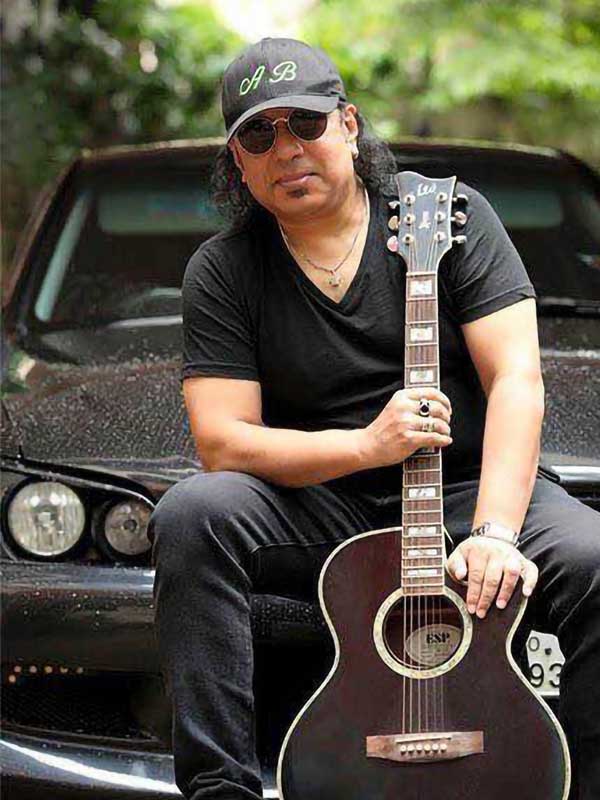
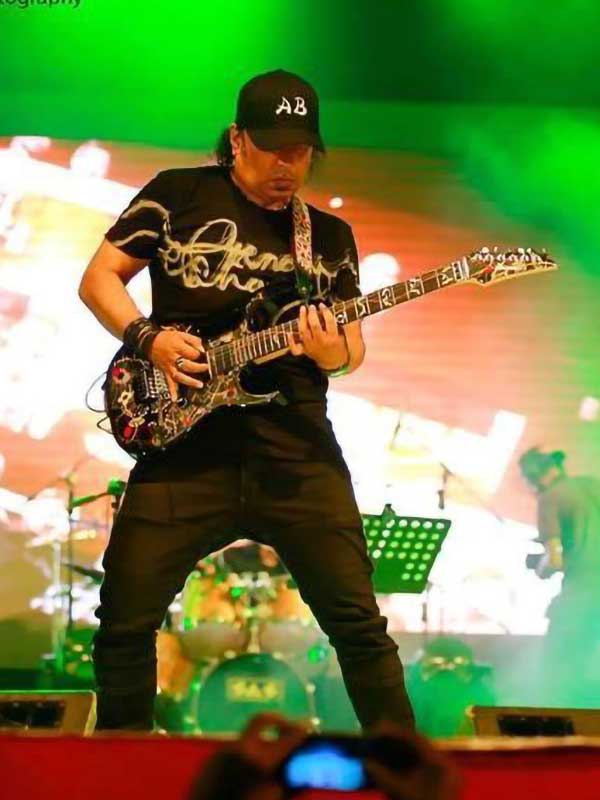
Ayub Bachchu (আইয়ুব বাচ্চু), often affectionately known by his initials AB, was a transformative force in Bangladeshi music—a gifted guitarist, vocalist, songwriter, and founder of the iconic rock band Love Runs Blind (LRB). Born on 16 August 1962 and passing away on 18 October 2018, Bachchu’s musical journey spanned over four decades, during which he shaped the rock scene and earned iconic status in pop culture.
Early Life and Musical Foundations
Born in Enayet Bazar, Kotwali in the Chittagong District of what was then East Pakistan, Bachchu grew up in a Bengali Muslim family and was the eldest among his siblings. Following Bangladesh’s Liberation War, the family moved to urban Chittagong, where Bachchu’s musical inclinations blossomed. He received his first acoustic guitar in 1973, during his sixth-grade school years—a pivotal gift that set his musical destiny in motion.
His early influences began in the mid-1970s: he played lead guitar for Spider from 1974 to 1977, then formed Ugly Boys around 1977 while in high school, and also joined Feelings (now Nagar Baul) as guitarist from 1977 to 1980.
A Decade with Souls (1980–1990)
In 1980, Bachchu joined the respected band Souls as lead guitarist—a tenure lasting an entire decade. During this period, he contributed to multiple studio albums including Super Souls (1982), College Er Corridore (1985), Manush Matir Kachakachi (1987), and East and West (1988). These years honed his craft as a musician and songwriter.
Launching LRB: Love Runs Blind (1991–2018)
In 1991, Bachchu departed Souls to establish his own band. Initially named Yellow River Band, they inadvertently picked up the name “Little River Band” during a club show, which Bachchu retained until discovering the Australian band of the same name, prompting a rename to Love Runs Blind (LRB) by 1997. LRB’s inaugural concert took place at the University of Dhaka in April 1991.
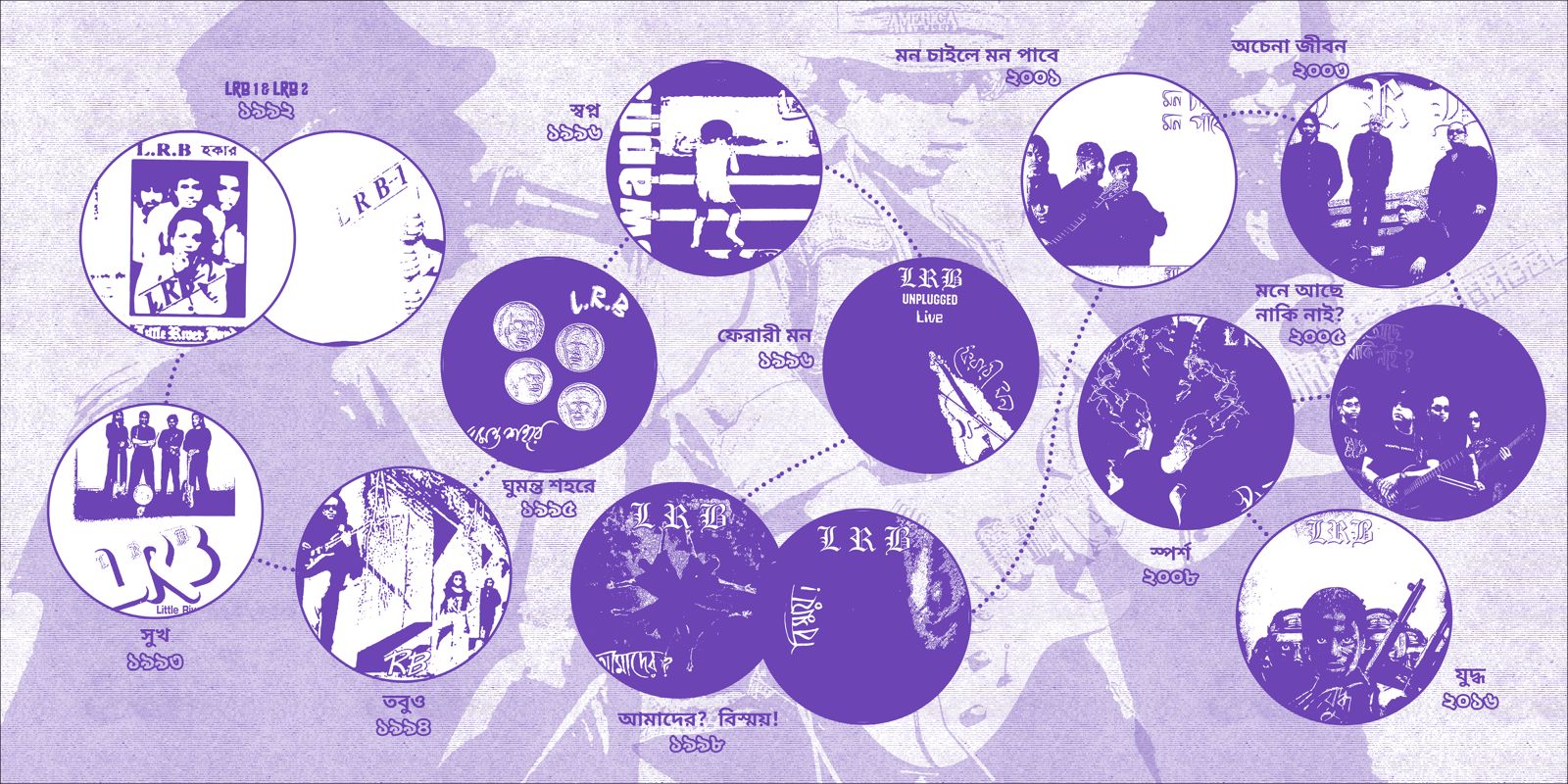
LRB’s studio breakthrough came in 1992 with the double album LRB I and LRB II, the first of its kind in Bangladesh. Their subsequent album Shukh (1993) featured the enduring rock anthem “Cholo Bodle Jai”—widely hailed as one of Bangladesh’s greatest rock songs.
Over the next decades, LRB released numerous albums, including Tobu O (1994), Ghumonto Shohore (1995), and the live album Ferari Mon: Unplugged Live (1996), the first Bangladeshi live album. They toured internationally, including the United States, and became the only Bangladeshi band to perform at Madison Square Garden in New York.
Solo Career and Studio Works
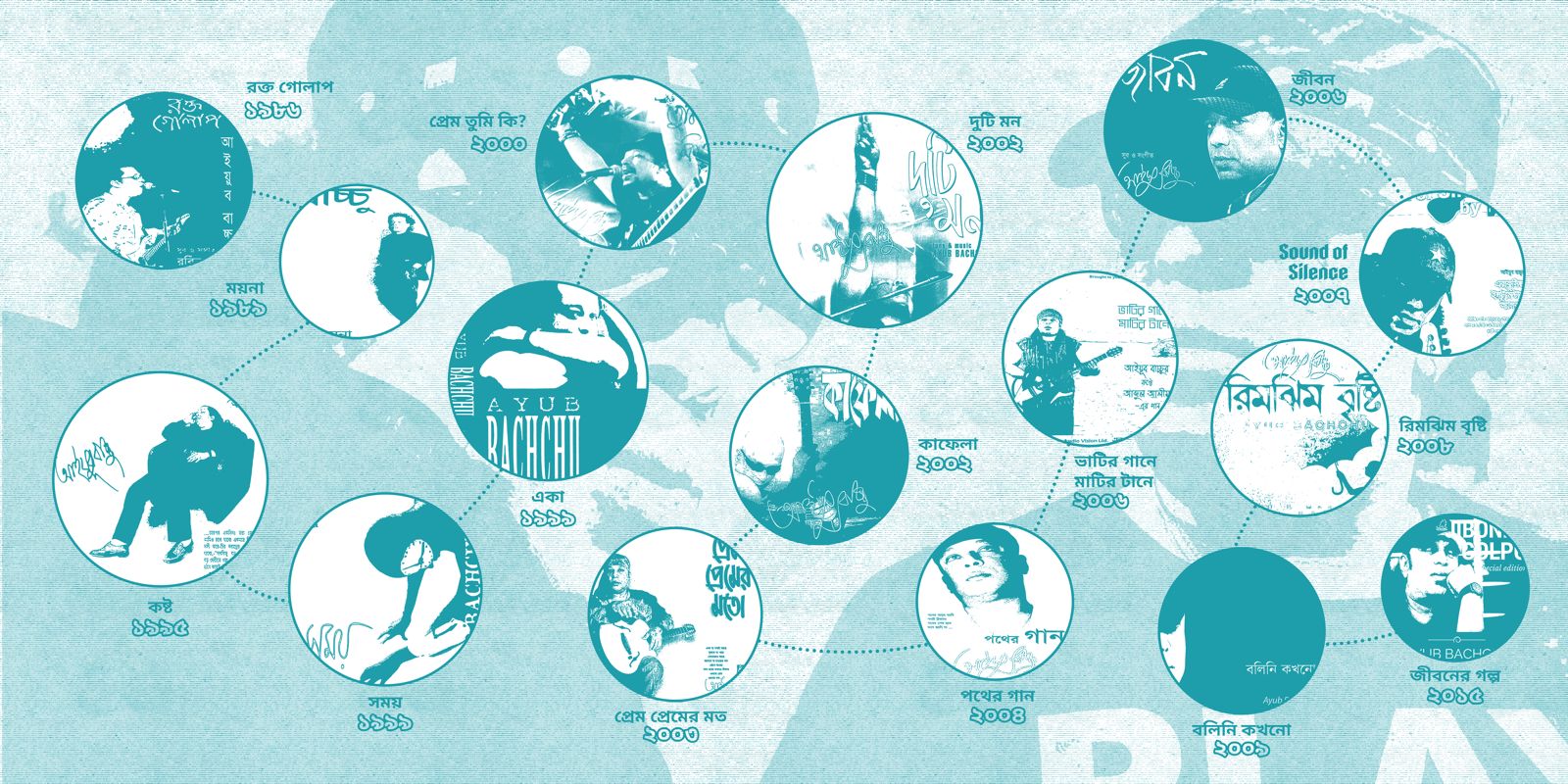
Parallel to his band success, Bachchu pursued a successful solo career. His debut solo album, Rokto Golap (Blood Rose), was released on 22 September 1986. A fusion of modern Bangla (Adhunik), pop, and rock (notably “Anamika”), the album featured Bachchu’s vocals and guitar but none of his songwriting.
His second solo album, Moyna (1988), released on 1 December 1988, marked his breakthrough. Bachchu himself penned his first lyrics for “O Bondhu Tomay”. The album blended pop rock, hard rock, and classical influences, and became commercially successful—selling over 60,000 copies. Hits like Moyna and Shubhro Bhore resonated widely.
Beyond these, he released Koshto (1995), and later instrumental works like Sound of Silence (2007)—the first instrumental rock album in Bangladesh. He also ventured into film music, contributing songs to movies such as Anutopto (1993), Loot Toraj (1997), Mon (1997), and Ammajan (1999).
Style and Influence
Renowned for his electrifying guitar work, Bachchu stood out as a powerful performer with chart-topping music and compelling melodies. He played not only guitar and bass but also occasionally keyboards and vocals. His musical style encompassed rock, blues, hard rock, pop rock, and classical elements—a blend that deeply influenced Bangladeshi pop and band culture.
Personal Life and Legacy
Ayub Bachchu married Ferdous Akhter Chandana in 1991. They had two children. He passed away from a cardiac failure on 18 October 2018 in Dhaka, leaving behind a monumental musical legacy.
In tribute to his enduring influence, Chittagong erected the “Rupali Guitar” sculpture—a stainless steel and iron monument named after his song Ferari Mon—in September 2019 at what was renamed Ayub Bachchu Chattar (formerly Probortok Mor). It stands as both a landmark and a testament to a life devoted to music.
Legacy and Impact
Ayub Bachchu’s life story is one of artistry, innovation, and infectious passion. He journeyed from local band scenes in Chittagong to the global stage, breaking musical boundaries and rewriting what Bangladeshi rock could be. As the driving force behind Souls, founder of LRB, and a celebrated solo artist, he inspired countless musicians and fans.
LRB’s groundbreaking albums—especially that 1992 double release—redefined album formats in Bangladesh. Hits like Cholo Bodle Jai remain evergreen favorites. With Sound of Silence, Bachchu even pioneered instrumental rock in a traditionally vocals-led music industry.
His death in 2018 sent waves of national grief, with performances and tributes across the country highlighting his centrality to Bangladeshi music. The Rupali Guitar sculpture now stands as a visual and cultural landmark—honoring AB’s legacy and continuing to inspire future generations.